
20 Japandi Living Room Ideas for a Calm, Beautiful Home

A living room should feel like a place where you can genuinely slow down. That is exactly what makes Japandi style so appealing. Blending the clean simplicity of Scandinavian design with the quiet elegance of Japanese interiors, Japandi creates spaces that feel warm, uncluttered, natural, and thoughtfully put together.
The style is minimalist without feeling cold. Instead of filling a room with decorative objects, Japandi focuses on pieces that are beautiful, practical, and made to last. Natural wood, soft neutral colors, organic textures, simple furniture, and carefully chosen decor all play an important role.
If you love peaceful interiors but still want your home to feel comfortable and inviting, these 20 Japandi living room ideas offer plenty of inspiration.
1. Start With a Warm Neutral Color Palette
Warm neutrals provide the perfect foundation for a Japandi living room. Think soft beige, oatmeal, warm white, sand, taupe, and muted greige rather than brilliant white or cool gray.
Using several related neutral shades adds depth while maintaining the peaceful atmosphere associated with Japandi interiors. A warm off-white wall, beige sofa, natural wood furniture, and cream rug can work beautifully together without making the room feel flat.
2. Choose a Low-Profile Sofa
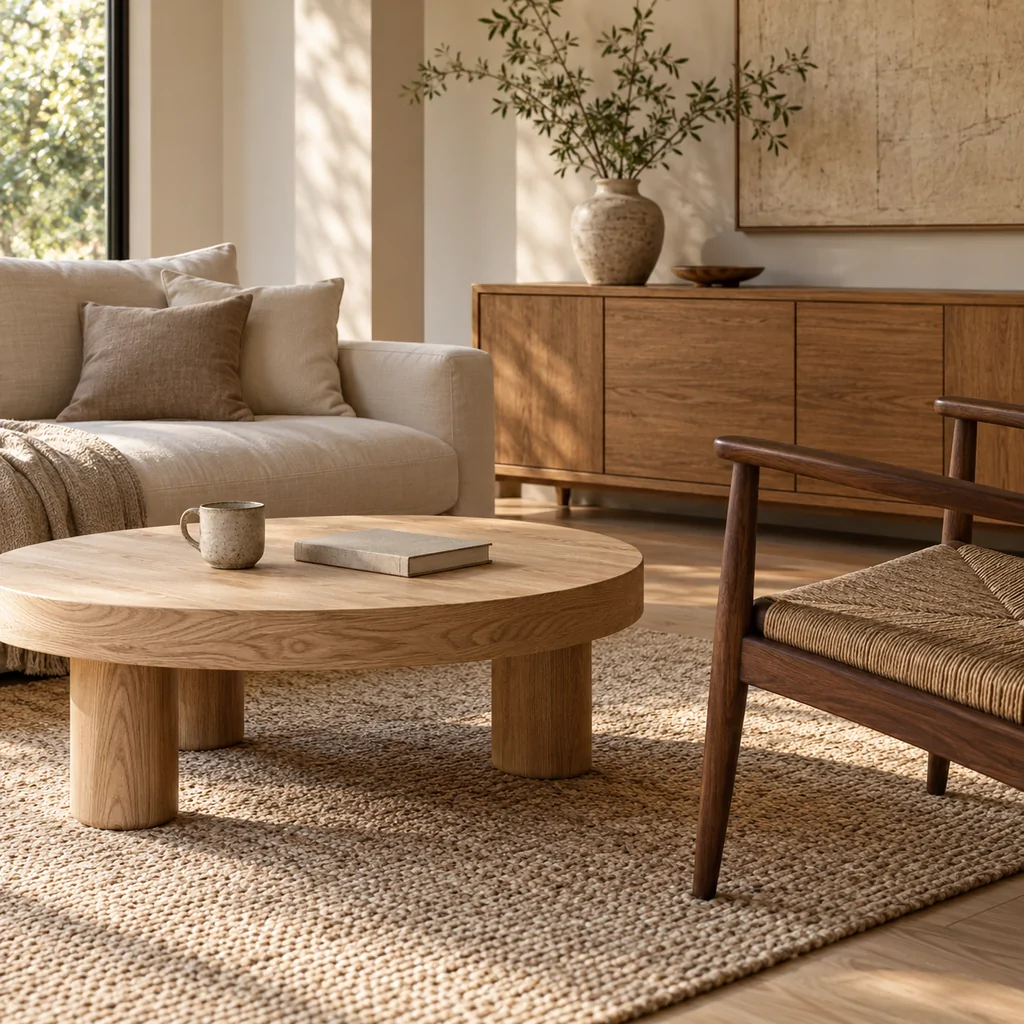
Low furniture is a recurring feature in Japanese-inspired interiors and works particularly well in a Japandi living room.
Choose a sofa with a simple silhouette, low back, and minimal detailing. Upholstery in linen, cotton, or another textured neutral fabric helps soften the clean lines.
A lower sofa can also make ceilings appear higher, giving the room a more spacious and relaxed appearance.
3. Bring in Natural Wood
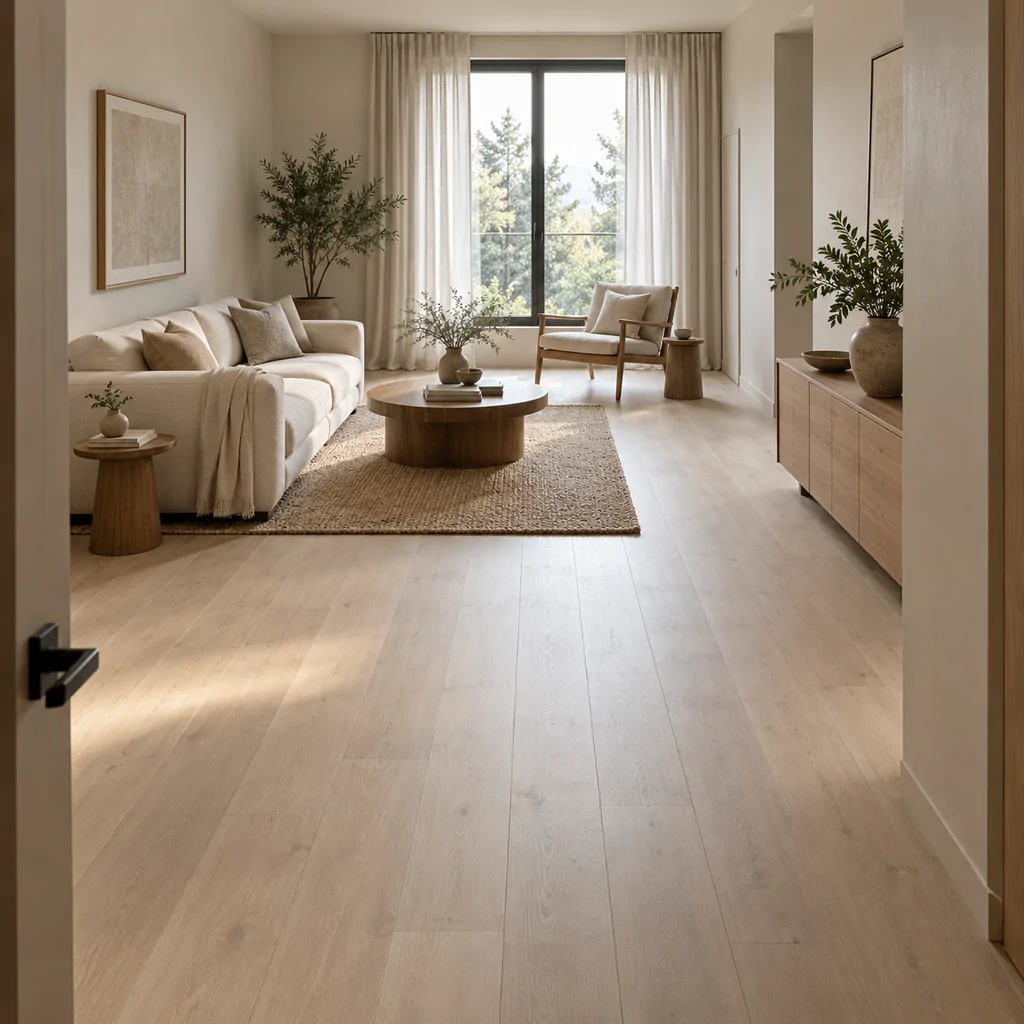
Wood introduces the warmth that prevents minimalist rooms from feeling sterile.
Oak, ash, beech, and other lighter woods complement the Scandinavian side of Japandi, while medium and darker woods can introduce Japanese-inspired contrast.
You do not need every wooden element to match. A light oak coffee table can sit comfortably beside a darker wooden chair when the shapes and finishes remain understated.
4. Keep the Layout Open and Uncluttered
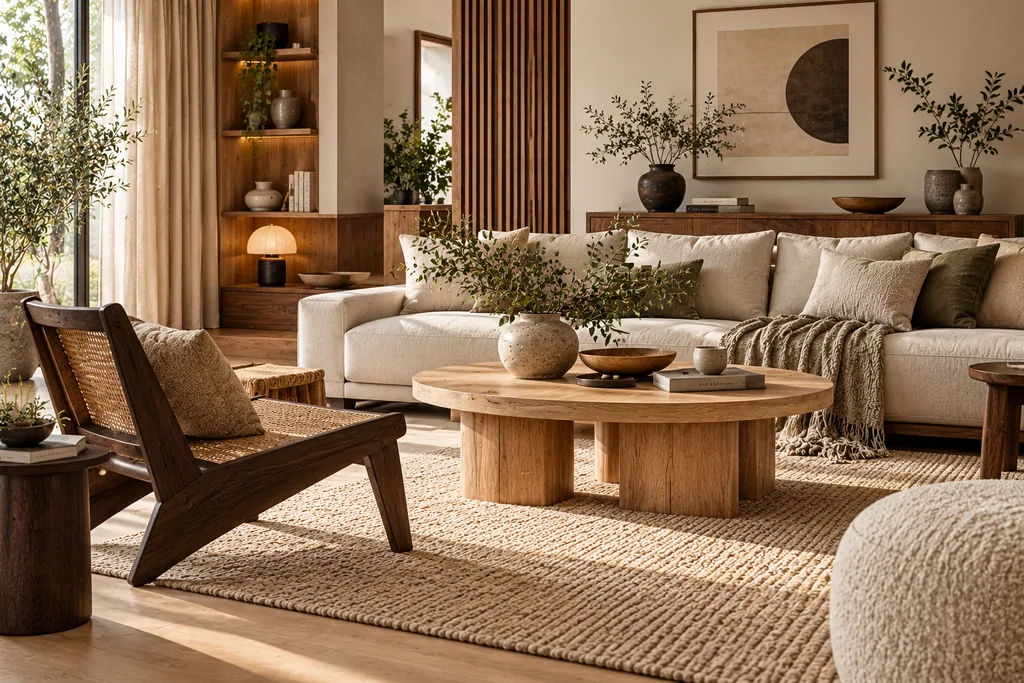
Japandi design values breathing room just as much as furniture.
Rather than trying to fill every empty corner, leave intentional space between major pieces. Give the sofa, coffee table, chairs, and decor enough room to stand individually.
This approach makes even relatively small living rooms feel calmer and more considered.
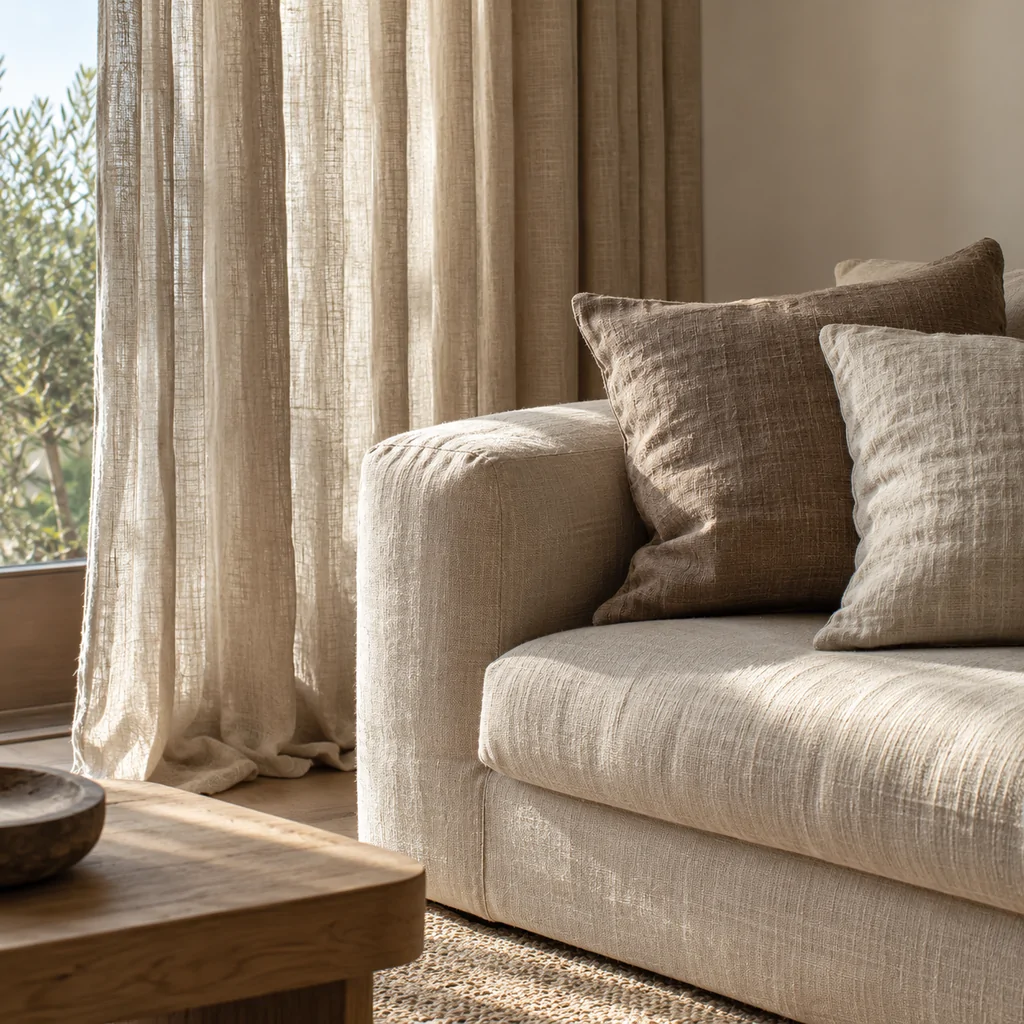
5. Add Texture Through Linen
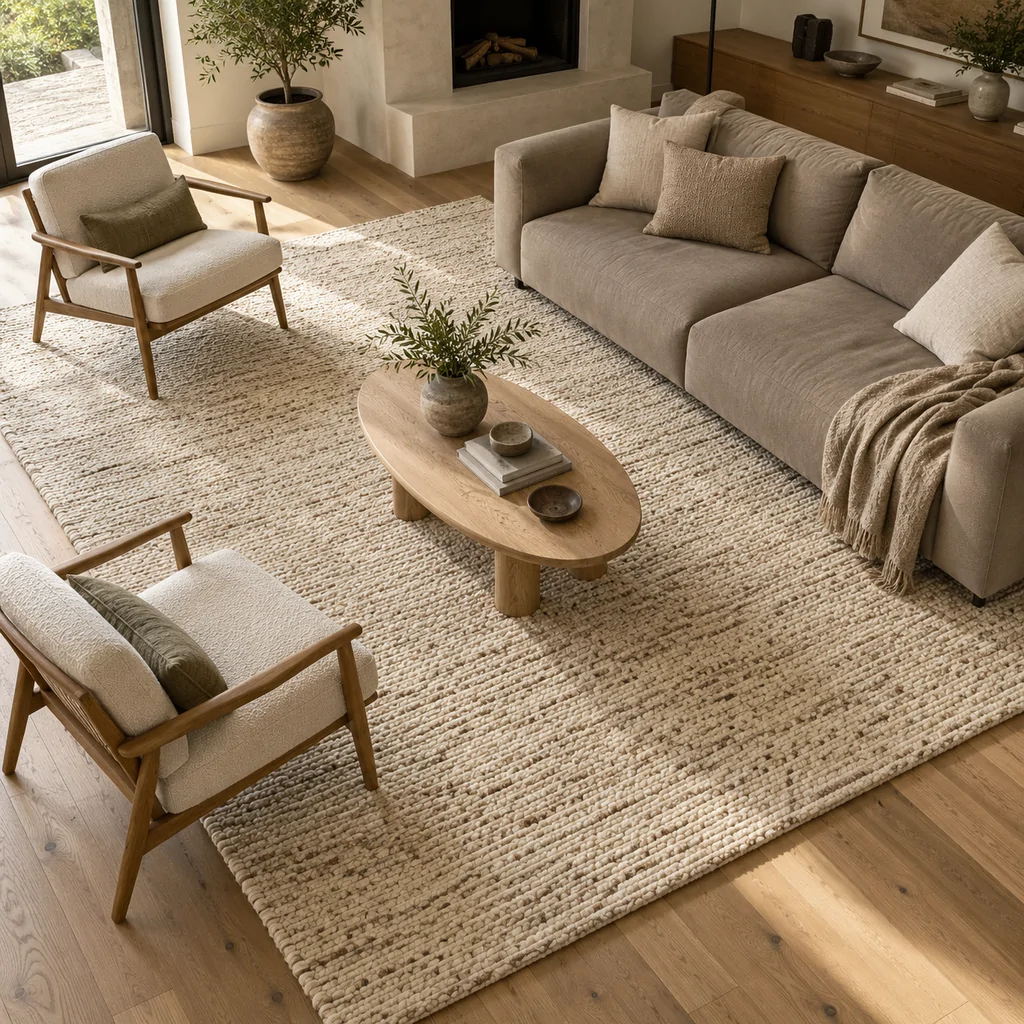
When a room uses a restrained color palette, texture becomes especially important.
Linen curtains, cushion covers, or a linen-blend sofa bring subtle variation without introducing unnecessary visual noise. The slightly imperfect texture also fits naturally with Japandi’s appreciation for authentic materials and understated beauty.
Choose earthy, subdued colors such as flax, stone, cream, or muted brown.
6. Use Black Accents Sparingly
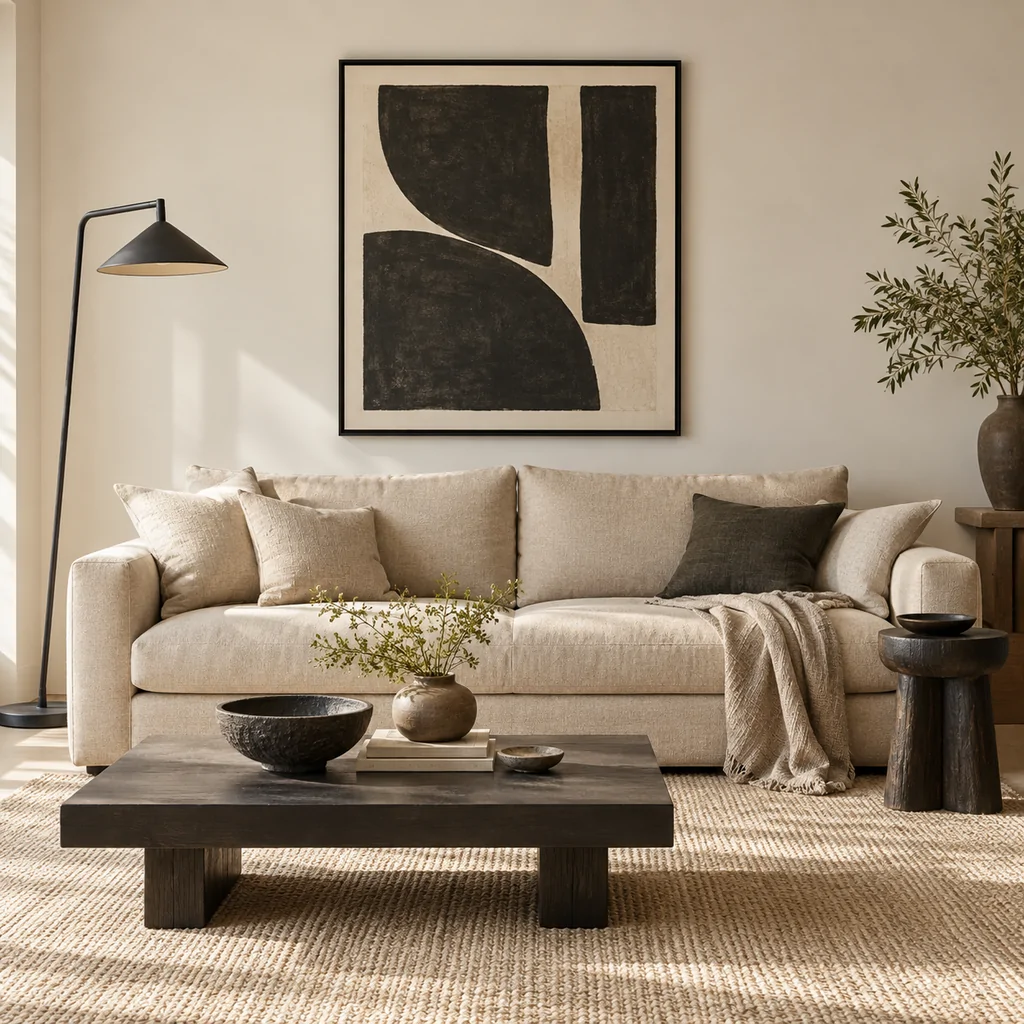
A few dark details can give a neutral Japandi living room much-needed definition.
Consider a slim black floor lamp, dark wooden side table, charcoal ceramic vase, or simple black picture frame.
The key is restraint. Dark accents should punctuate the room rather than dominate it, creating contrast against lighter woods and warm neutral fabrics.
7. Introduce Handmade Ceramics
Japandi decor celebrates craftsmanship and objects that show evidence of the person who made them.
A slightly irregular ceramic vase, handmade bowl, or stoneware planter can therefore be more appropriate than highly polished decorative accessories.
Display only a few pieces at a time. Their texture, shape, and craftsmanship become more noticeable when they are surrounded by open space.
8. Add a Large Textured Rug
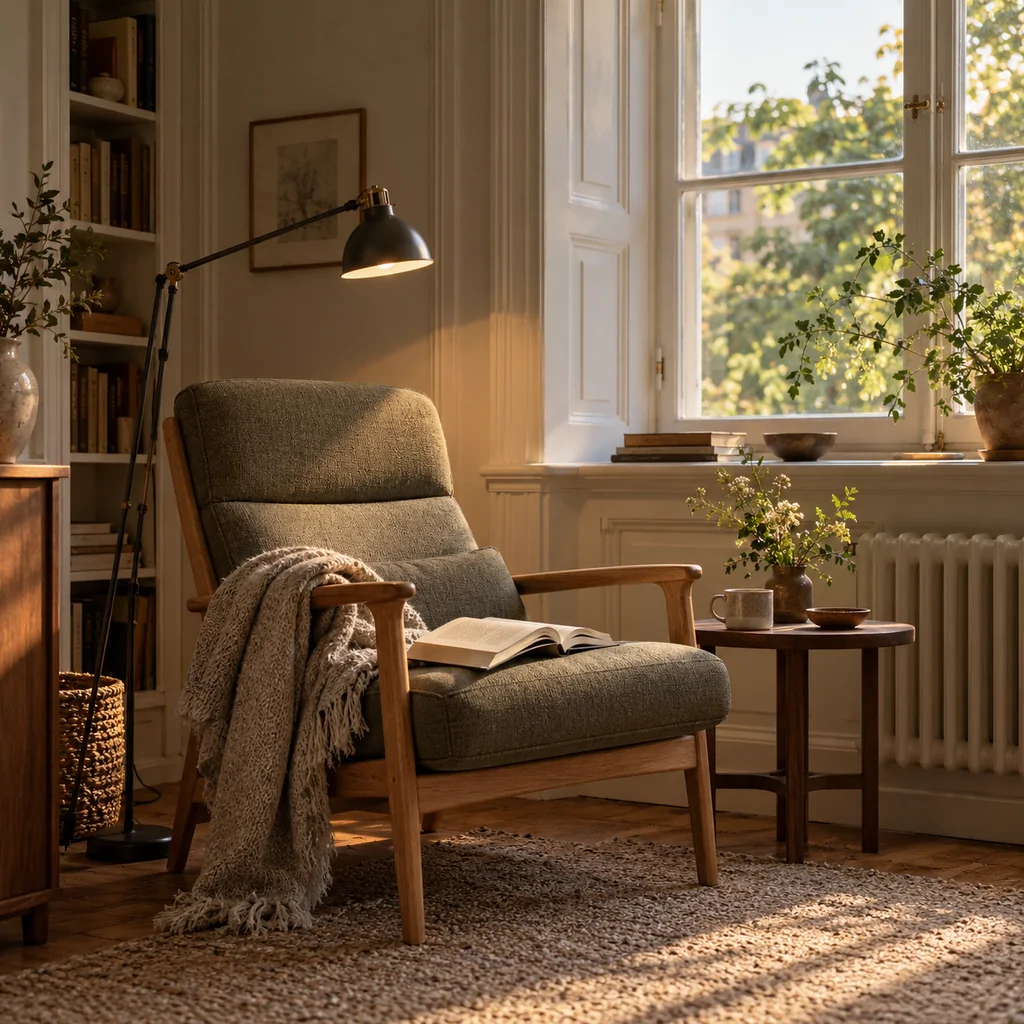
A rug can immediately make a minimalist living room feel softer and more inviting.
Look for wool, jute, or textured woven designs in cream, beige, taupe, or another earthy neutral. Avoid overly complicated patterns that compete with the room’s quiet aesthetic.
Choose a rug large enough to visually connect your main seating pieces rather than leaving it floating beneath the coffee table.
9. Decorate With Simple Greenery
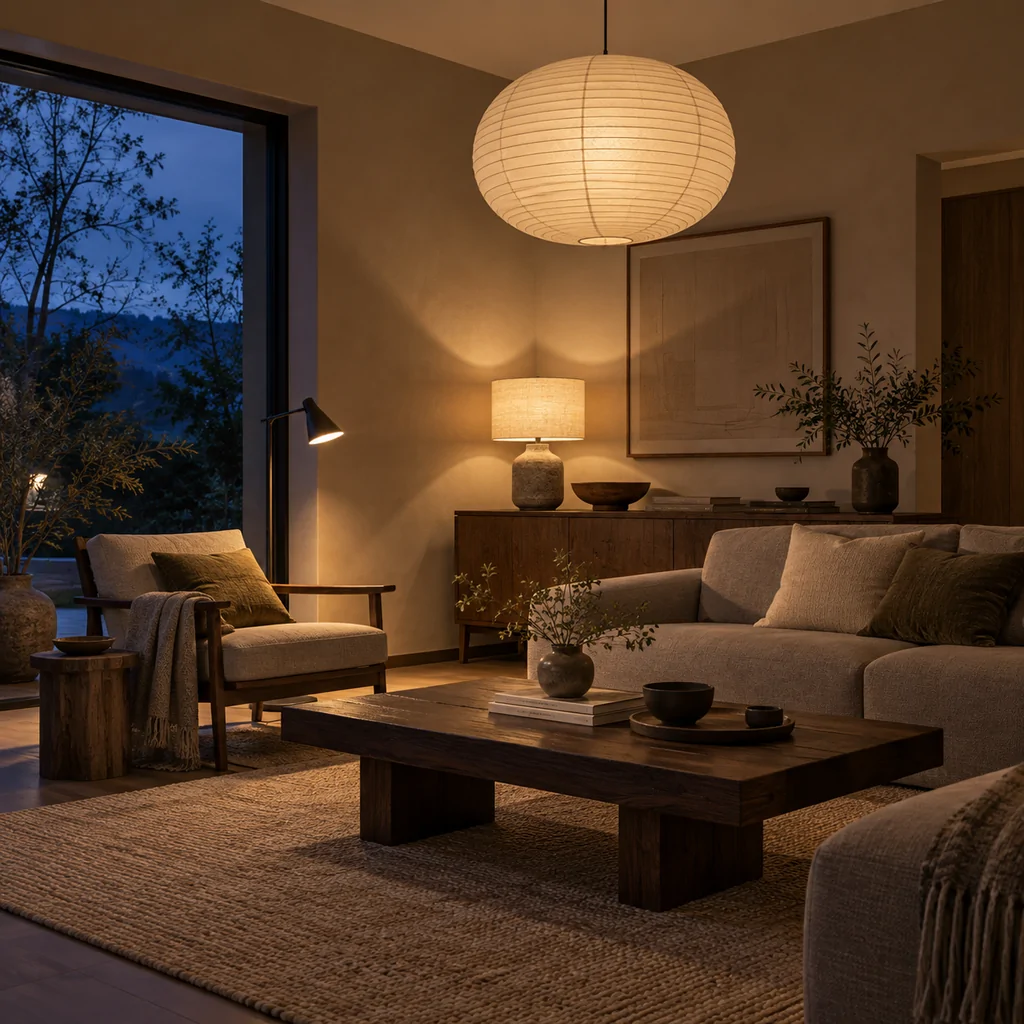
Plants provide color while maintaining the connection to nature that is central to Japandi design.
Instead of creating a room filled with small houseplants, consider one or two sculptural plants or branches. An olive tree, understated indoor tree, or a simple branch arrangement in a ceramic vessel can create a stronger visual statement with less clutter.
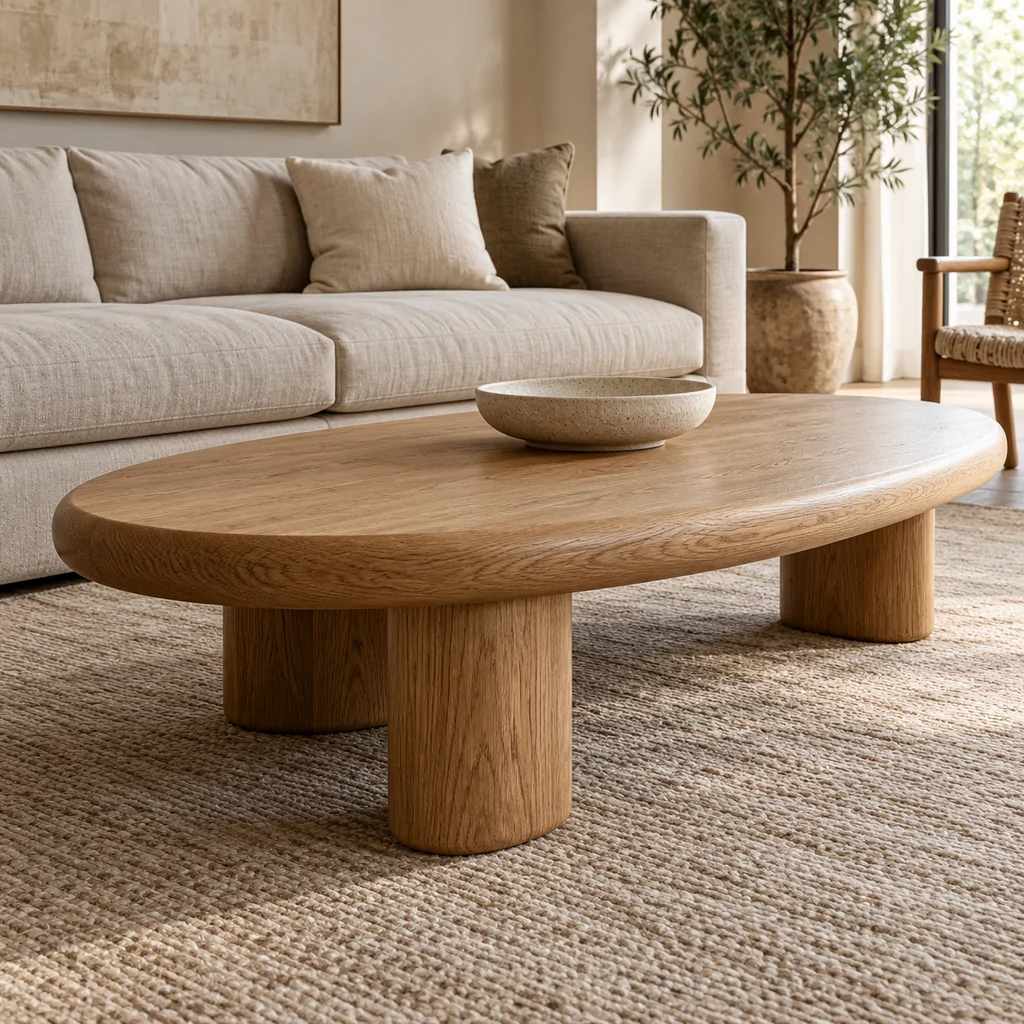
10. Try a Sculptural Wooden Coffee Table
Functional furniture can double as decoration.
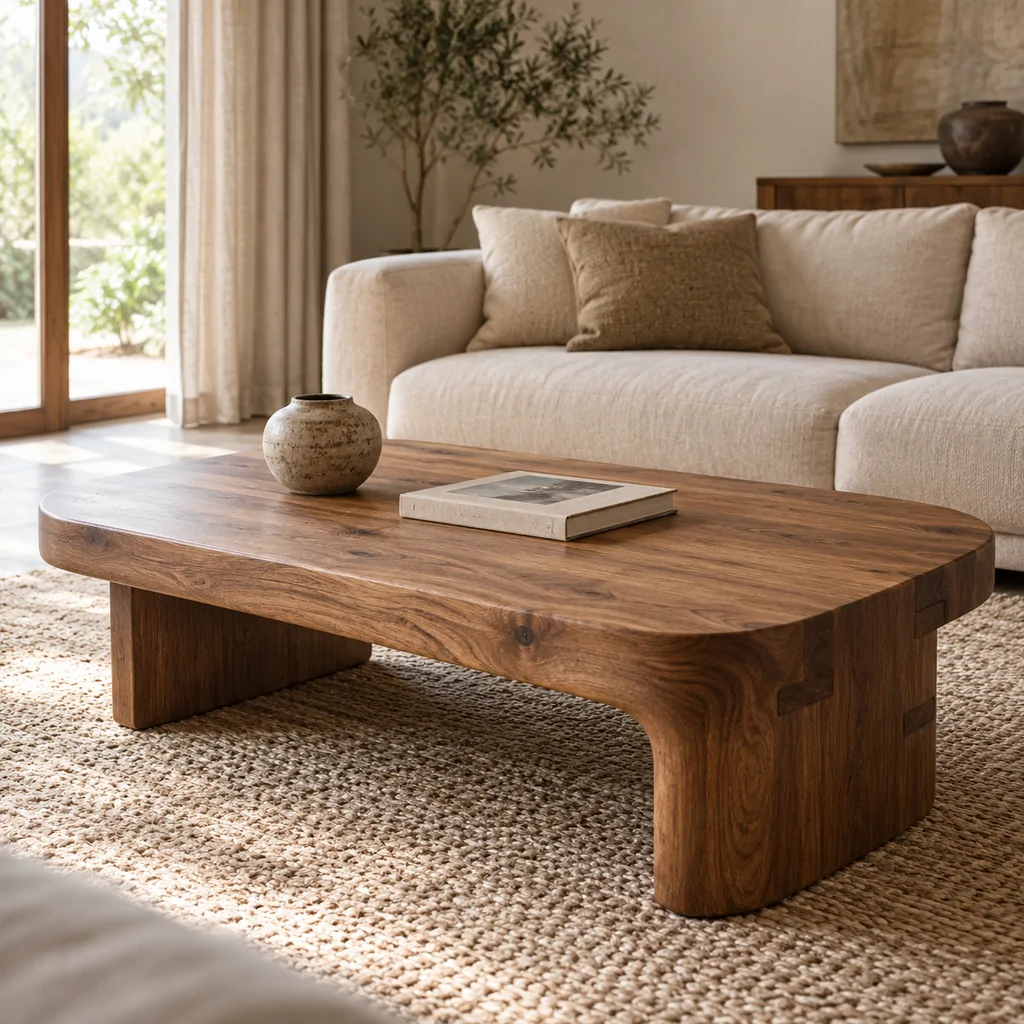
A beautifully proportioned wooden coffee table with curved edges, visible grain, or a handcrafted appearance gives the center of the living room character without requiring additional accessories.
Keep the surface relatively clear, perhaps styling it with one ceramic object and a thoughtfully selected book.
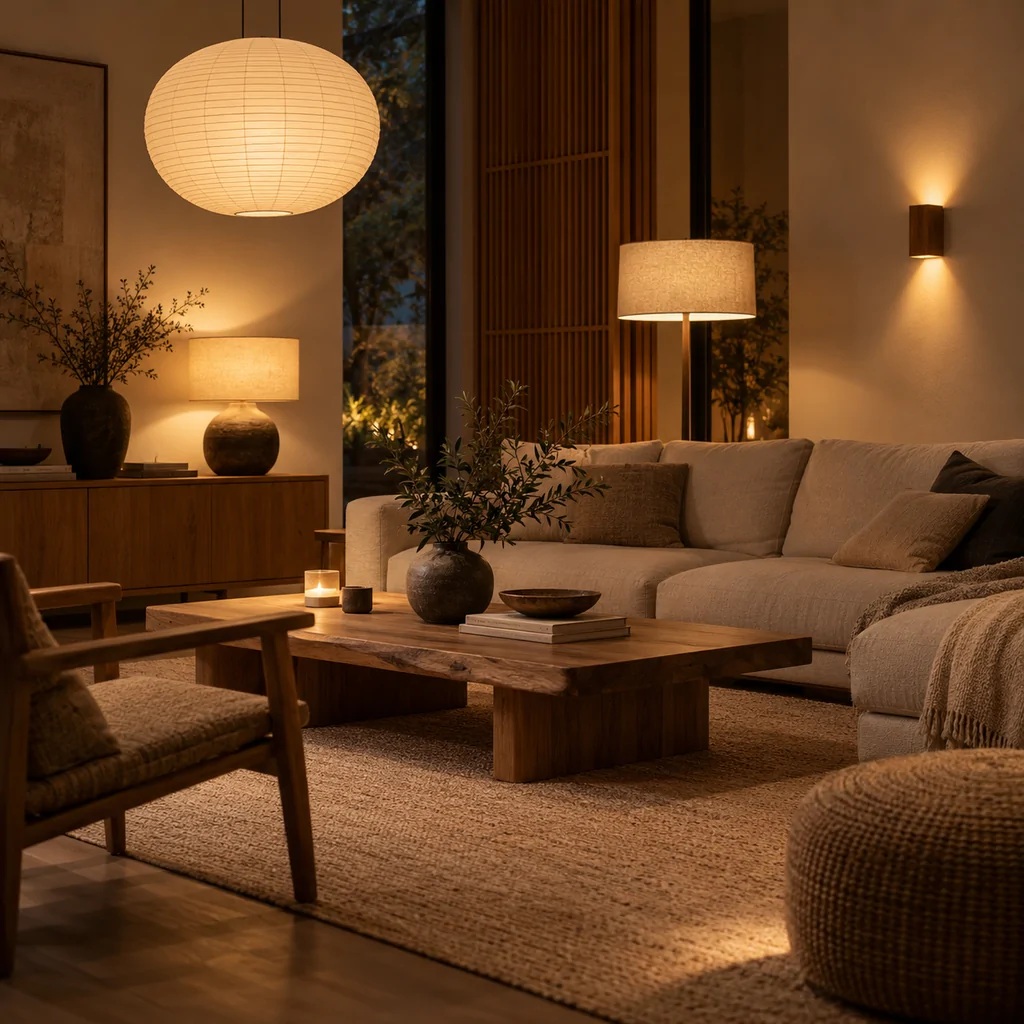
11. Use Soft, Diffused Lighting
Lighting has an enormous influence on how a Japandi living room feels.
Rather than relying exclusively on bright overhead lighting, create several softer sources. Paper-inspired lamps, fabric shades, minimalist wall lights, and understated floor lamps can produce a warm evening glow.
Warm lighting reinforces the relaxed, intimate atmosphere of the room.
12. Embrace Imperfect Natural Materials
A perfectly polished interior can sometimes feel impersonal. Japandi takes a different approach by finding beauty in natural variation and imperfection.
Wood grain, handmade pottery, woven fibers, stone surfaces, and slightly irregular finishes bring personality into an otherwise simple room.
These details make minimalism feel lived-in rather than showroom-perfect.
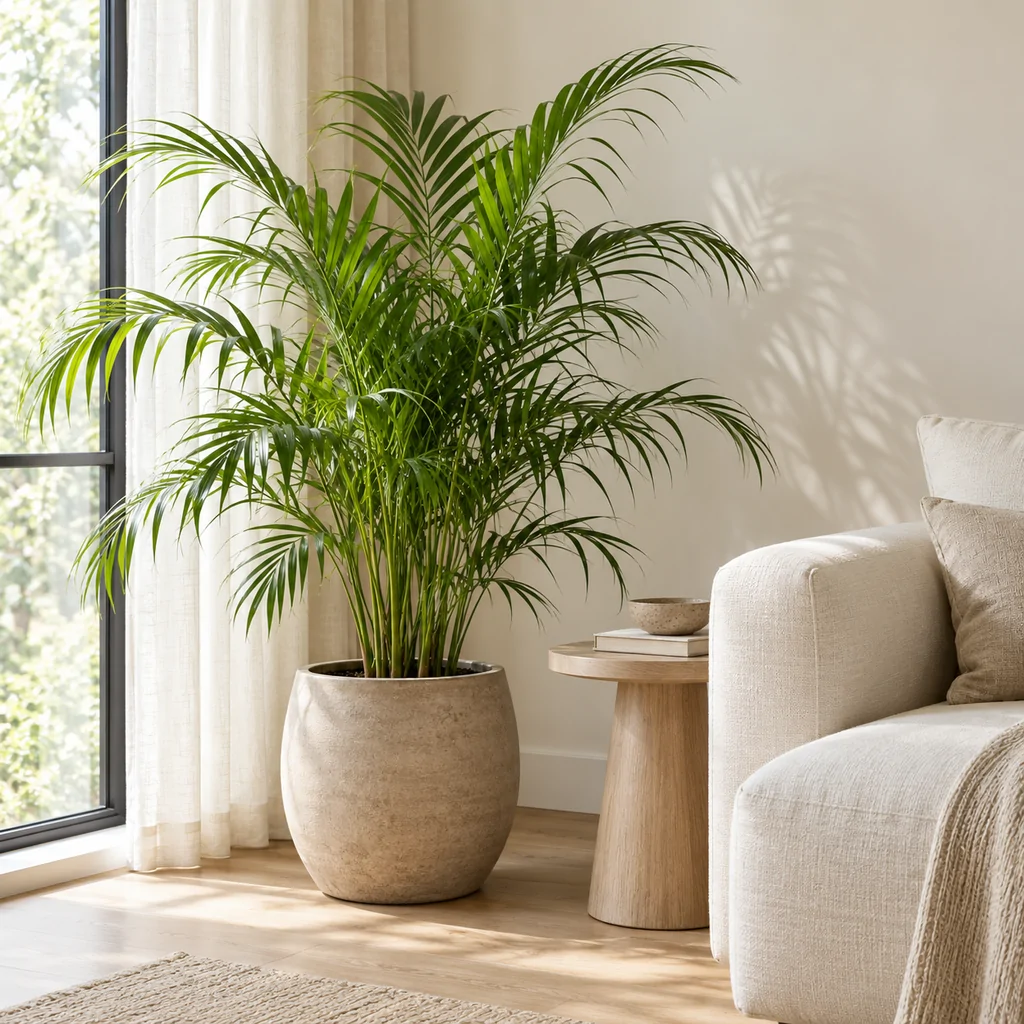
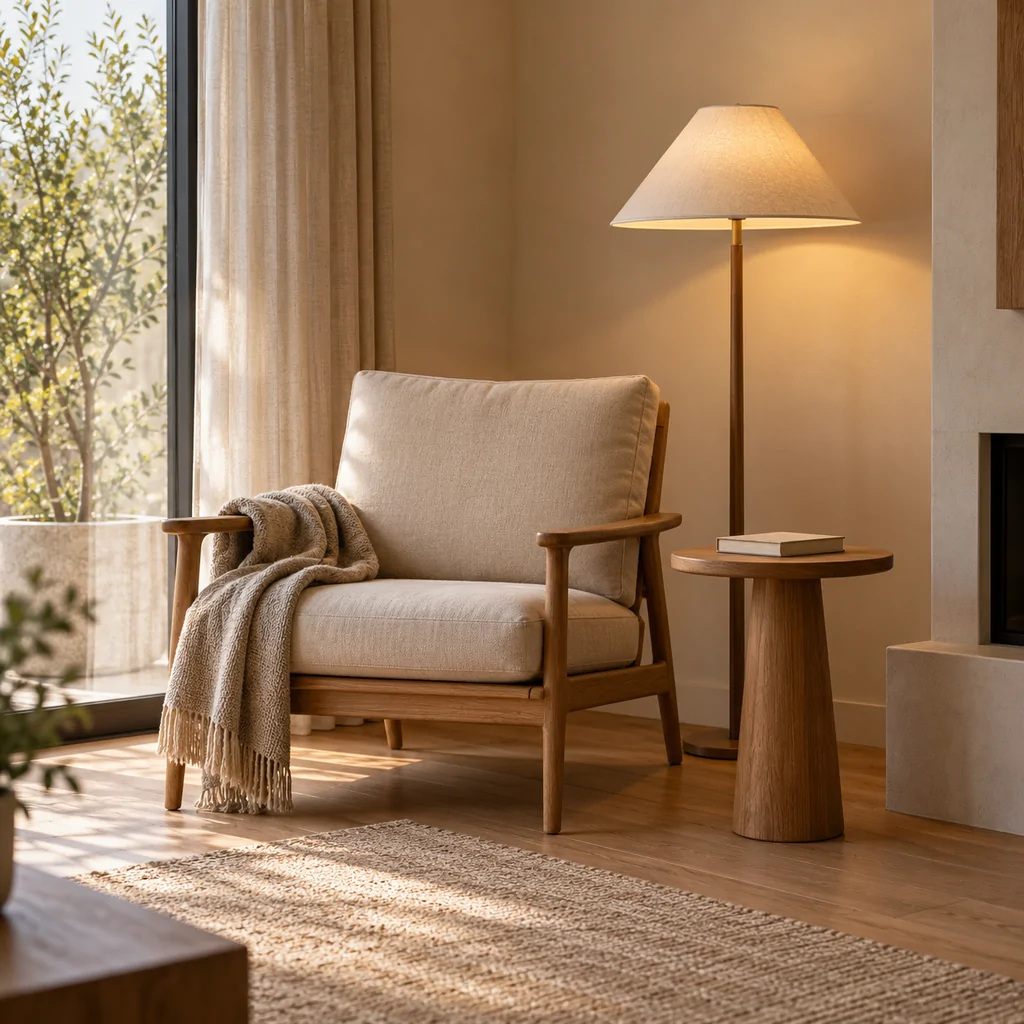
13. Create a Calm Reading Corner
An unused living room corner can become a peaceful reading area without adding much visual clutter.
Pair a comfortable wooden or upholstered lounge chair with a small side table and floor lamp. Add a soft throw if needed, but keep the arrangement simple.
This also reflects an important Japandi principle: each part of the room should have a purpose.
14. Choose Furniture With Clean Lines
Avoid overly ornate furniture and excessive detailing.
Japandi furniture typically has simple silhouettes, thoughtful proportions, and visible craftsmanship. Look for streamlined sofas, wooden armchairs, uncomplicated shelving, and tables with clean profiles.
Curved furniture can work too, particularly when the curves feel organic rather than decorative.
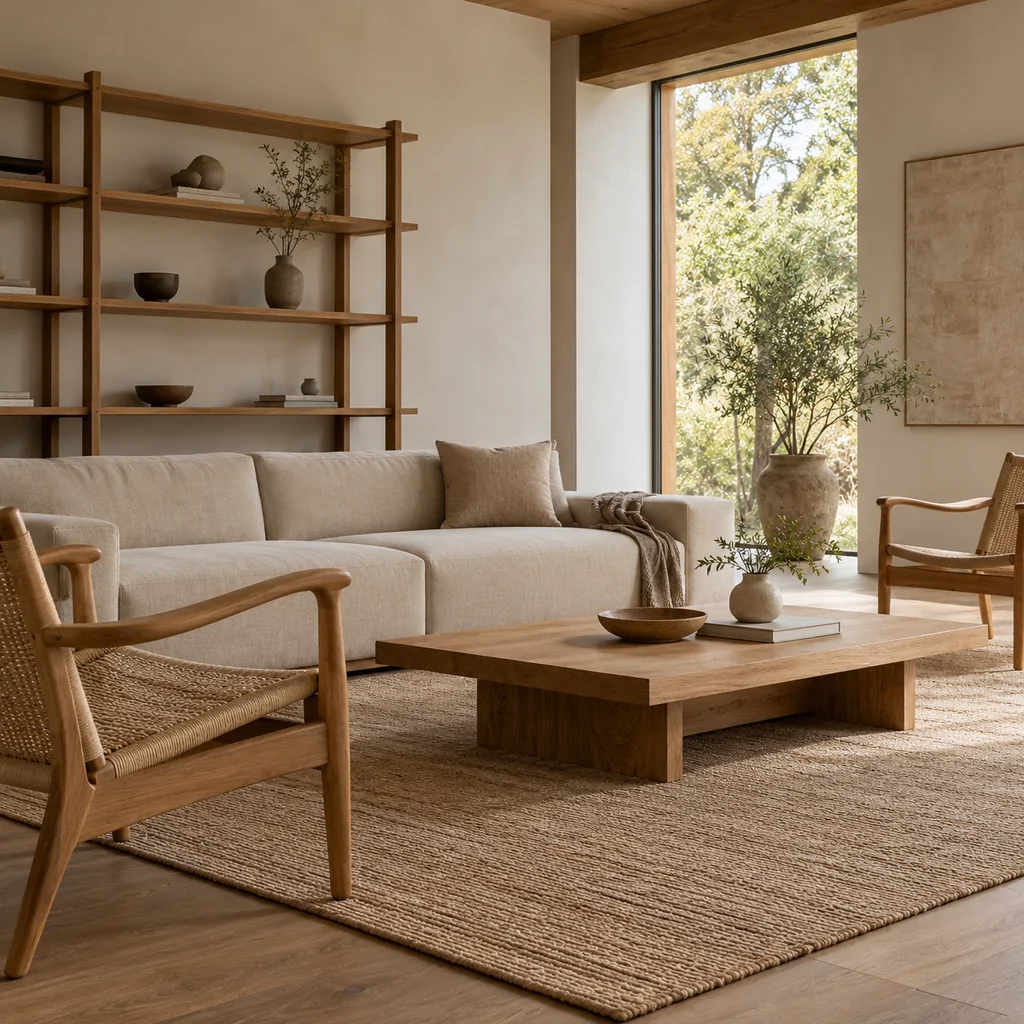
15. Incorporate Woven Elements
Natural woven materials add warmth and tactile interest.
A woven lounge chair, rattan accent, seagrass basket, or natural-fiber lampshade can complement wooden furniture and neutral upholstery.
Use these elements selectively. Japandi is not about filling the room with rustic textures; it is about creating a carefully balanced mix of natural materials.
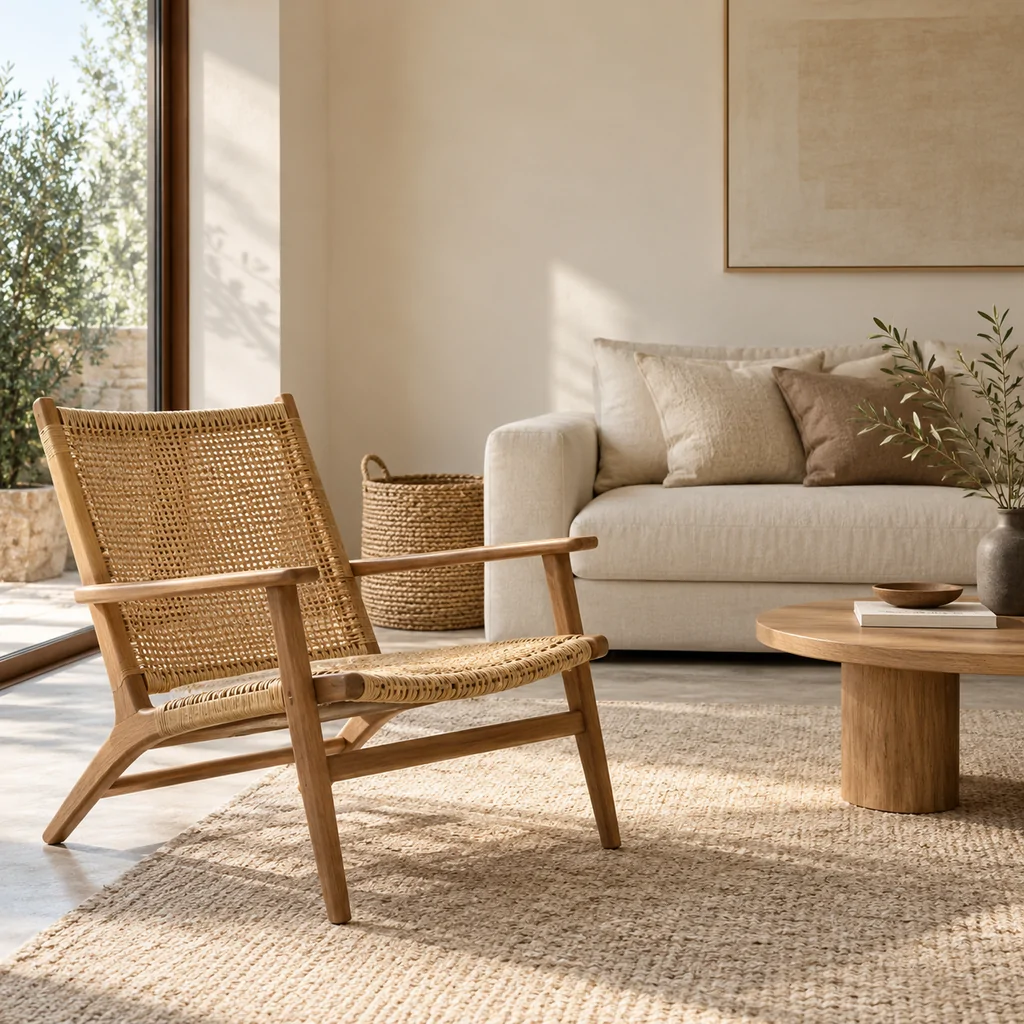
16. Keep Wall Decor Minimal
You do not need a large gallery wall to make a Japandi living room interesting.
One oversized abstract artwork, a textured wall piece, or two understated prints may be enough. Look for compositions featuring earthy colors, organic shapes, or simple line work.
Leaving some walls relatively bare creates visual rest and allows the artwork you do display to have greater impact.
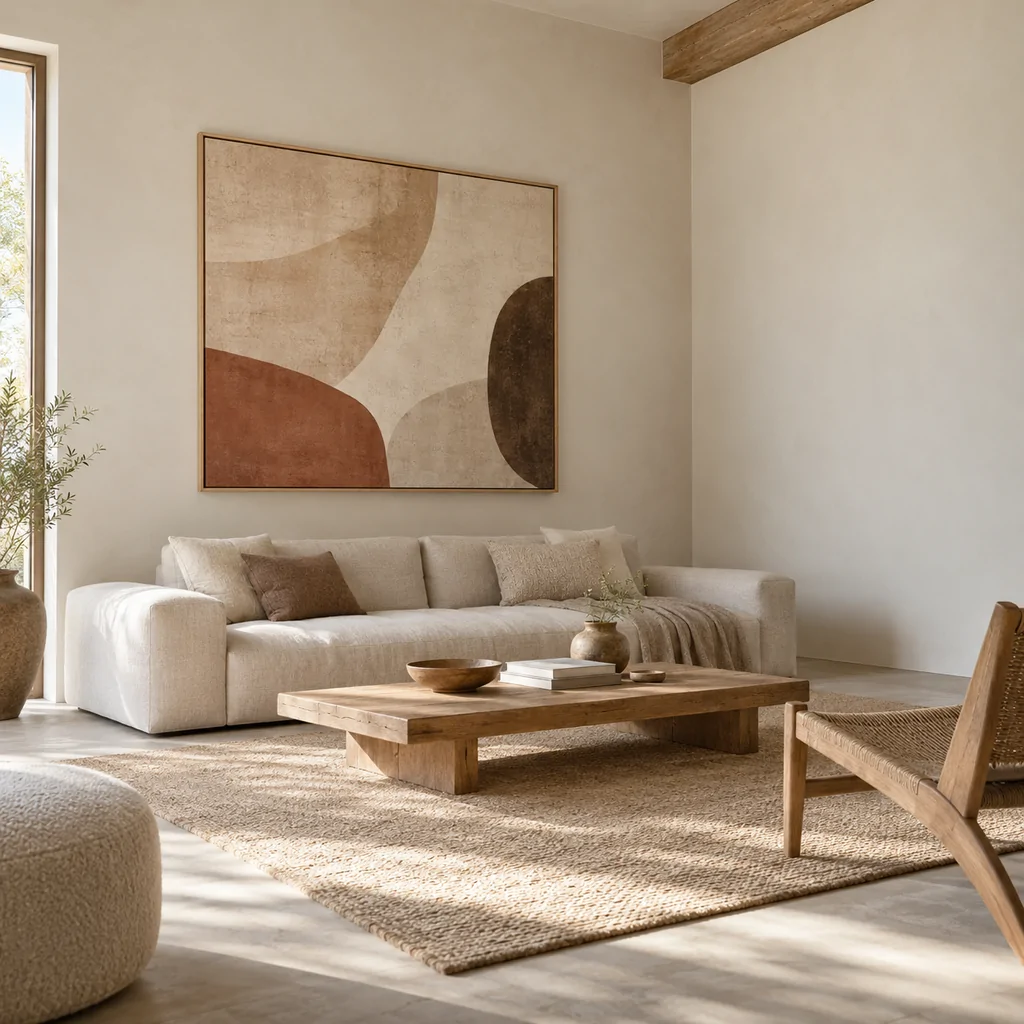
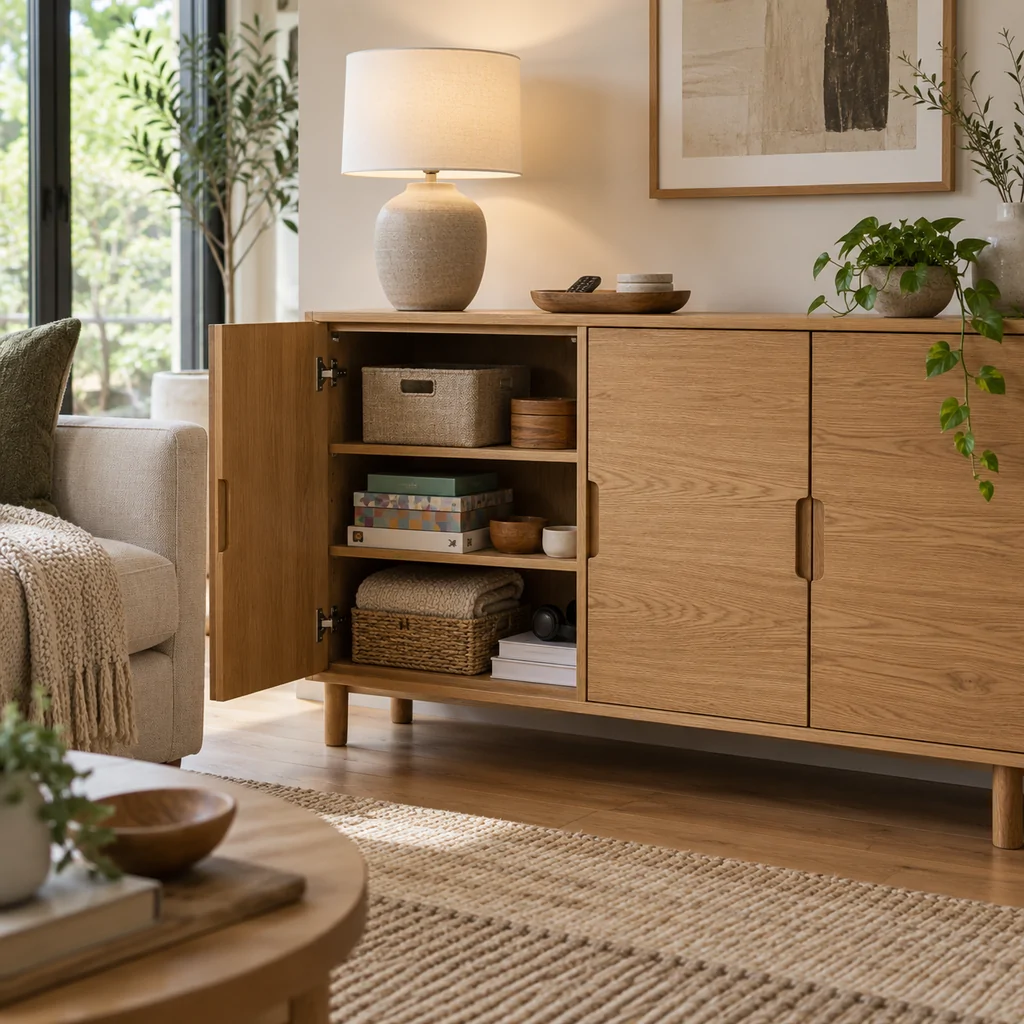
17. Add Hidden Storage
Clutter can quickly undermine the calm atmosphere of a minimalist room.
Closed cabinets, streamlined media units, storage benches, and discreet baskets provide practical places for remotes, cables, toys, paperwork, and everyday necessities.
The goal is not to create an unrealistically empty home. Good storage simply makes it easier to maintain a visually peaceful living space.
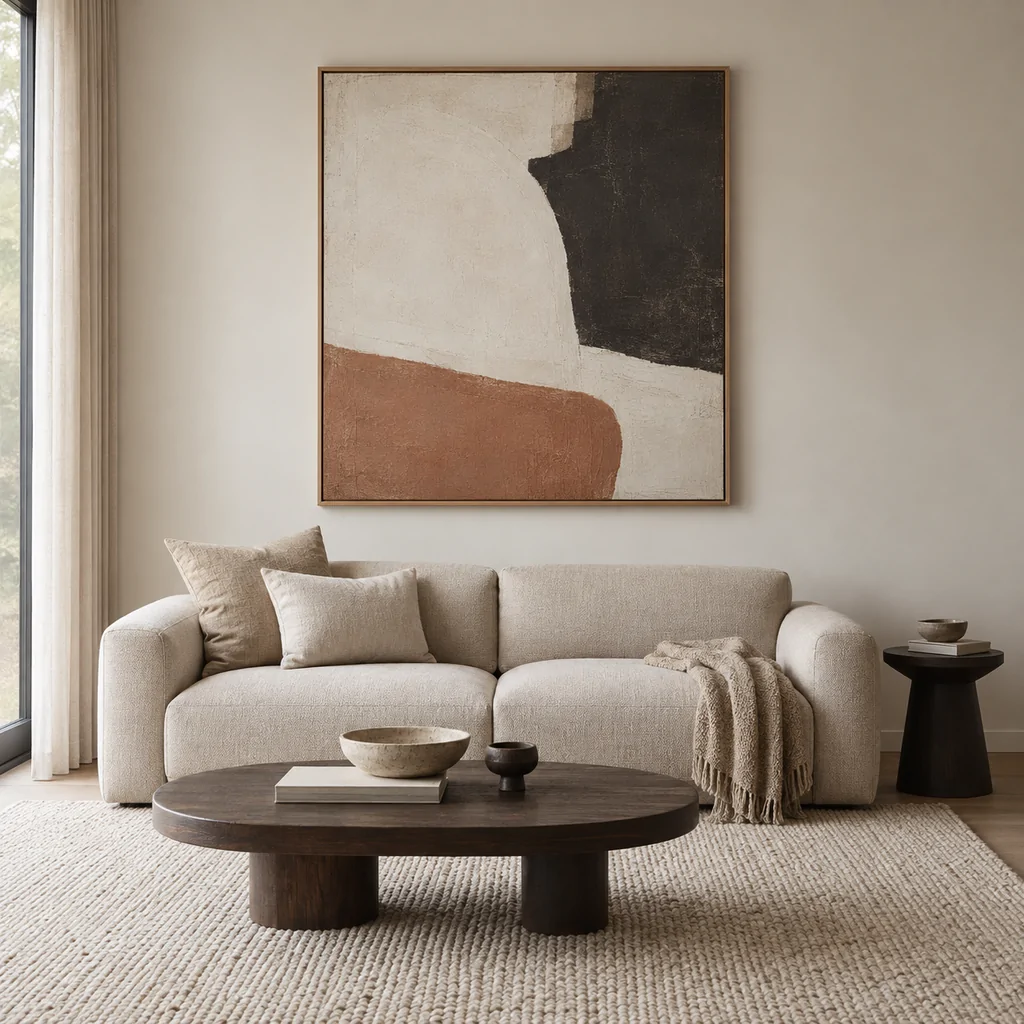
18. Layer Cream, Beige, and Brown
A neutral room does not have to rely on a single shade.
Try combining cream walls with an oatmeal sofa, beige rug, walnut furniture, and chocolate-brown accents. These subtle tonal changes create dimension while keeping the palette cohesive.
This technique is particularly effective if you want a warmer, richer interpretation of Japandi style.
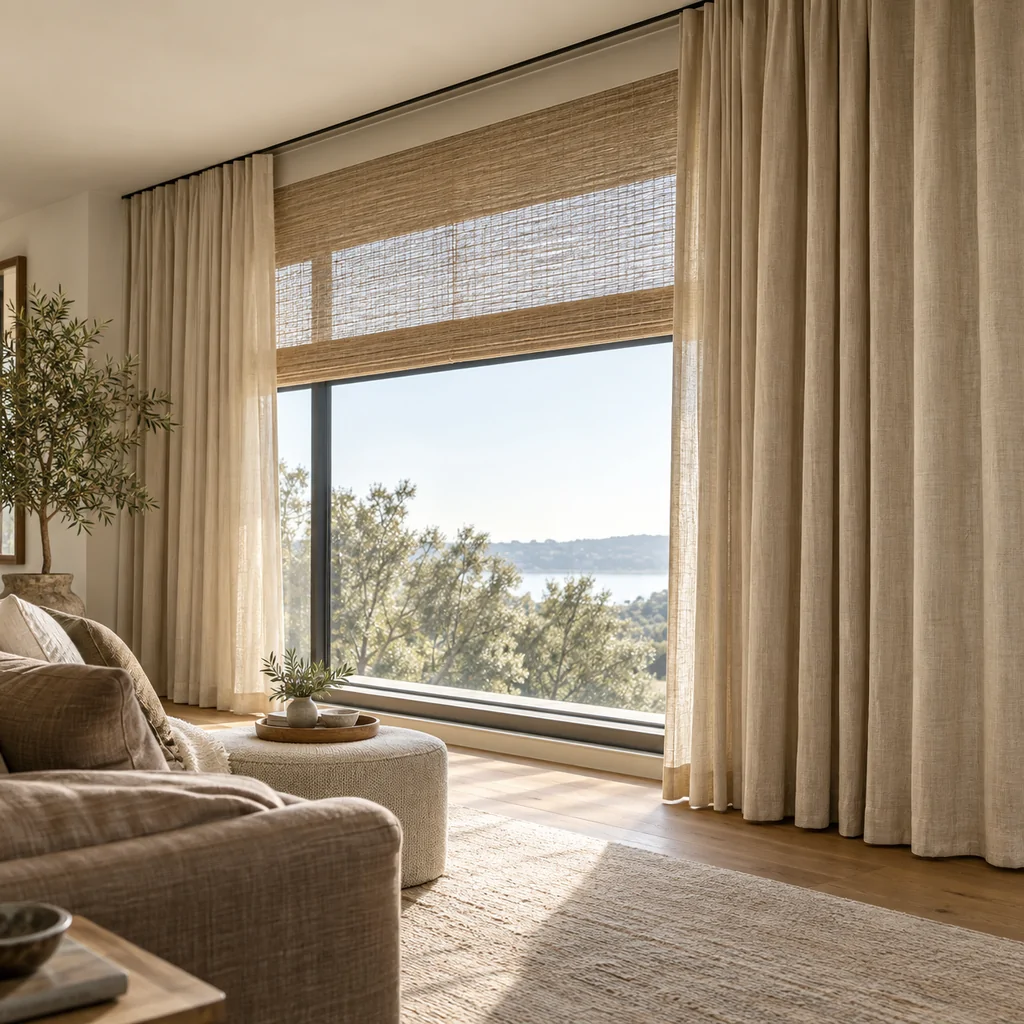
19. Let Natural Light Take Center Stage
Japandi rooms often look their best when natural light can move freely through the space.
Avoid unnecessarily heavy window treatments. Linen curtains, simple blinds, or sheer panels can provide privacy while maintaining a soft, airy feeling.
Position furniture so it does not block windows, and use lighter surfaces strategically to help daylight travel throughout the room.
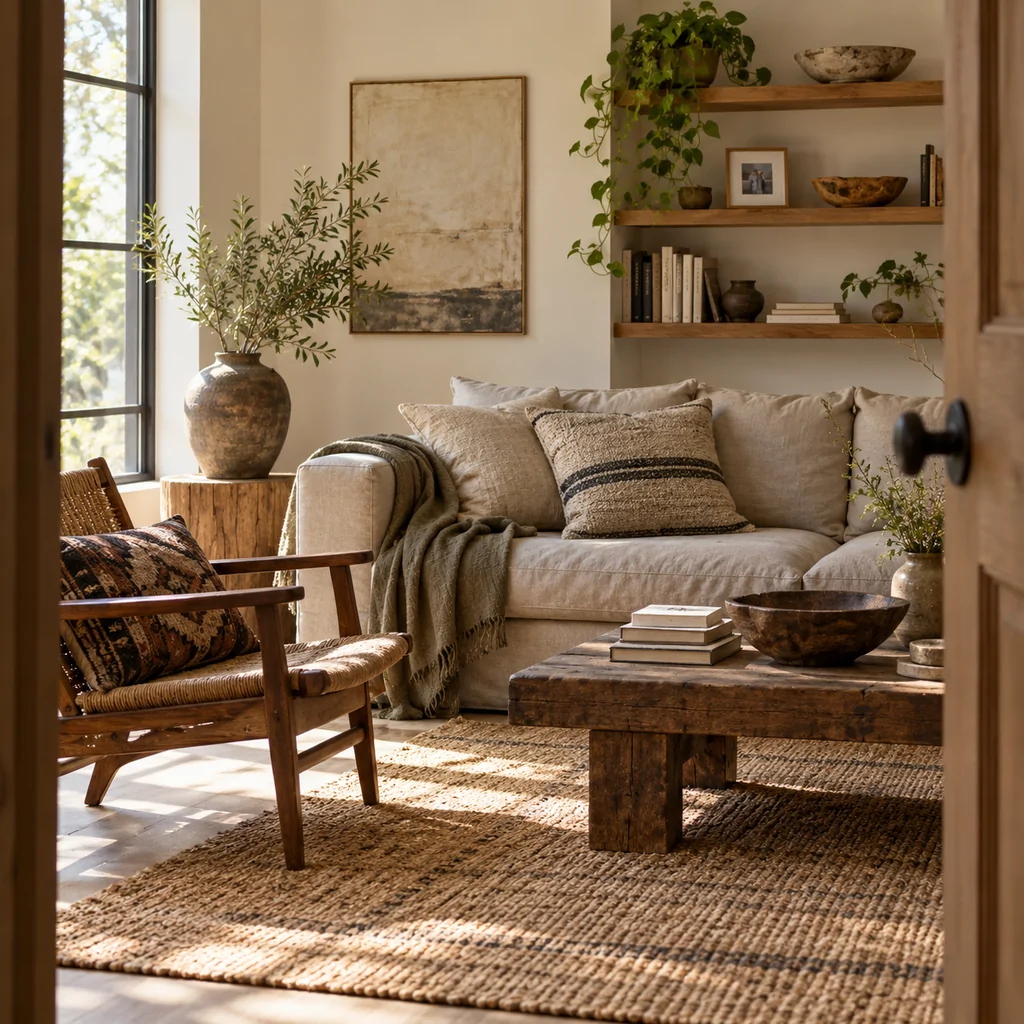
20. Decorate With Fewer, Better Pieces
Perhaps the most important Japandi living room idea is also the simplest: resist the urge to decorate every available surface.
Choose objects because they are useful, meaningful, beautifully made, or genuinely enjoyable to look at. A handcrafted vase, favorite artwork, quality lamp, and well-made wooden table can contribute more to the room than dozens of trend-driven accessories.
This does not mean your living room should feel empty. The goal is intentionality. When every piece has enough space to be appreciated, the entire room feels more balanced.
Creating a Japandi Living Room That Feels Like Home
The beauty of Japandi design lies in its balance. Scandinavian warmth keeps minimalism comfortable, while Japanese influences introduce simplicity, craftsmanship, and a deeper appreciation for natural materials.
You also do not need to redesign your entire living room at once. Start by removing unnecessary clutter, simplifying your color palette, and introducing a few natural textures. From there, consider investing in better-quality furniture and replacing purely decorative objects with pieces you truly value.
Most importantly, allow the room to remain personal. Japandi is not about reproducing a perfectly styled photograph. It is about creating a calm, functional living environment where natural materials, thoughtful design, and everyday comfort work together.
Whether you introduce a low-profile sofa, handmade ceramics, warm wood, linen textiles, or simply more breathing room, even a few of these ideas can move your living room toward the relaxed and timeless Japandi aesthetic.